Can You Make Up Years of Missed Salah?
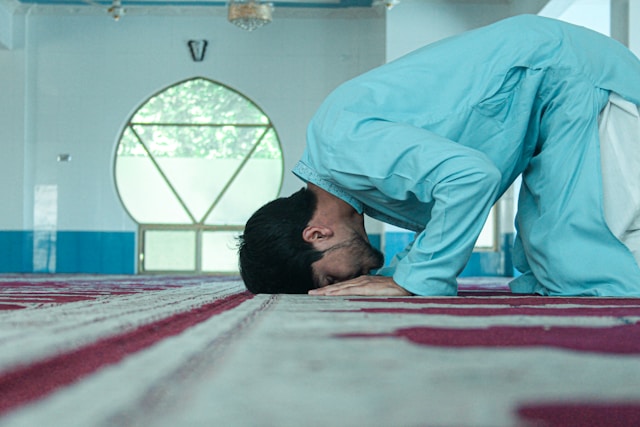
Yes, you can and must make up years of missed obligatory (Fard) prayers according to the majority of Islamic scholars. This process is known as Qada Salah. Making up these prayers helps clear your spiritual debt with Allah. It also brings immense peace to your heart. Allah is deeply merciful, and taking action today will lift the weight of past neglect.
Missing prayers can weigh heavily on your mind. You might feel distant from your faith. You might worry that it is too late to change. Please know that it is never too late. Islam is a religion of ease and hope. If you are looking to determine exactly how many prayers you owe right now, you can use our Qaza Prayer Calculator to establish your baseline today.
This guide will show you exactly how to catch up. You will learn a simple, practical method to fix your past mistakes without burning out.
Understanding Your Spiritual Debt
In Islam, the daily prayers are a direct connection to your Creator. They are not optional. They are the foundation of your faith.
When you miss a prayer, it remains a debt. Think of it like a financial loan. If you owe money, you must pay it back. The same rule applies to your prayers.
"The debt owed to Allah has more right to be paid." — Prophet Muhammad (peace be upon him). (Sahih al-Bukhari)
This perspective changes how you view your situation. You are not a failure. You are simply someone paying back a loan. Every single prayer you make up brings you closer to spiritual freedom.
What Do the Four Madhabs Say?
Islamic jurisprudence provides clear guidance on this topic. The four major schools of thought share a common view.
- The Hanafi School: Making up missed Fard (obligatory) prayers is mandatory. You must also make up missed Witr prayers.
- The Maliki School: You must make up all missed obligatory prayers. You should prioritize them over voluntary prayers.
- The Shafi'i School: It is compulsory to make up every missed prayer immediately if missed without a valid excuse.
- The Hanbali School: You must make up past prayers in chronological order whenever possible.
All four schools agree on the core rule. Your past prayers do not just disappear. You must actively work to complete them.
How to Calculate Your Missed Prayers
Before you start praying, you need a plan. Do not rely on guesswork. Guessing can cause anxiety.
Follow these simple steps to find your number:
- Find your starting age: Identify the age you reached puberty. In Islam, accountability begins at puberty.
- Find your tracking age: Identify the age when you started praying consistently.
- Subtract the numbers: Subtract your starting age from your tracking age.
- Add a buffer: If you are unsure, add a few extra months. It is safer to over-pray than under-pray.
Example Calculation Table
|
Factor |
Example Details |
Your Details |
|
Age of Puberty |
13 years old |
Fill in your age |
|
Age of Consistent Prayer |
23 years old |
Fill in your age |
|
Total Years Missed |
10 years |
Fill in your years |
|
Total Days to Make Up |
3,650 days |
Fill in your days |
Do not let large numbers scare you. You will not pray them all in one day. You will take small steps every day.
The Paired-Prayer Method: A Practical Framework
The easiest way to make up prayers is the paired method. This routine fits naturally into your daily life. It prevents exhaustion.
The concept is simple. Pair every current daily prayer with one past missed prayer.
- Pray today’s Fajr, then immediately pray one past Fajr.
- Pray today’s Dhuhr, then immediately pray one past Dhuhr.
- Pray today’s Asr, then immediately pray one past Asr.
- Pray today’s Maghrib, then immediately pray one past Maghrib.
- Pray today’s Isha, then immediately pray one past Isha.
Using this method, you complete one day of missed prayers every single day. If you do this for a year, you erase a full year of debt.
Only Pray the Fard and Witr Units
When making up years of prayers, speed and consistency matter. You do not need to pray voluntary prayers (Sunnah or Nafl) from the past. Focus purely on what is mandatory.
Here is what you need to pray for each missed day:
- Fajr: 2 Rakats (Fard)
- Dhuhr: 4 Rakats (Fard)
- Asr: 4 Rakats (Fard)
- Maghrib: 3 Rakats (Fard)
- Isha: 4 Rakats (Fard) + 3 Rakars (Witr)
The Witr prayer is required in the Hanafi School. If you follow another school, check their specific ruling on Witr. Omitting Sunnah prayers during this time keeps your routine sustainable.
Overcoming the Mental Hurdles
The biggest enemy in this journey is despair. Satan wants you to feel hopeless. He whispers that your task is too big.
Remember that Allah sees your intention. Intentions hold immense value in Islam.
If you sincerely start this journey today, Allah knows your heart. Even if you die before finishing, Allah may forgive you based on your sincere efforts.
"Actions are judged by intentions." — Prophet Muhammad (PBUH). (Sahih al-Bukhari)
Be kind to yourself. You are fixing a past mistake. That takes courage. Celebrate your consistency, no matter how small it seems.
How to Stay Consistent and Avoid Burnout
Many people start with too much enthusiasm. They try to pray ten days of missed prayers in one afternoon. They get tired quickly. Then, they stop completely.
Consistency wins the race.
- Set a daily reminder: Use a phone app or an alarm.
- Use a tracking app: Download a digital tally counter to log your progress.
- Find an accountability partner: Share your goals with a trusted friend.
- Make it a habit: Treat your Qada prayers like brushing your teeth. Do it without thinking.
If you miss a day of Qada, do not quit. Just resume the habit the next day. Small steps lead to massive results over time.
Repentance and the Boundless Mercy of Allah
Making up physical prayers is only one part of the healing process. The other part is sincere repentance (Tawbah).
True repentance requires three things:
- Stop the sin: Commit to never abandoning your current prayers.
- Feel regret: Feel genuine sorrow for the time you lost.
- Make amends: Start praying your Qada prayers immediately.
Allah loves those who turn back to Him. He is Al-Ghafur, the Most Forgiving. He is Al-Raheem, the Most Merciful.
Your past does not define your future. Your actions today define your relationship with Allah. Start your journey toward healing right now.
Frequently Asked Questions
- Do I need to make up years of missed salah?
Yes, you need to make up your missed prayers. The majority of Islamic scholars state that missed Fard prayers remain a debt. You must pay this spiritual debt back over time.
- How to pray missed salah for years?
You can pray them by using the paired-prayer method. Pray one past prayer right after your current daily prayer. Focus only on the obligatory Fard units to make the process manageable.
- What's the punishment for missing salah?
Intentionally missing salah is a major sin in Islam. It brings spiritual darkness and distances you from Allah's blessings. However, sincere repentance and making up the prayers erase the punishment.
- Can you catch up on Missed salah?
Yes, you can absolutely catch up on missed prayers. It requires a clear calculation, a steady routine, and daily consistency. Allah makes the path easy for those who try.
- Can missed salah be forgiven?
Yes, Allah forgives all sins when you seek sincere repentance. You must show your sincerity by fixing the mistake. Praying your Qada prayers is the practical proof of your repentance.
- Is there anyway to make up years of missed prayers in Islam?
Yes, the primary way is to calculate the total years missed. Then, create a daily schedule to pray them. You can distribute them across your weeks and months until your debt is cleared.
- How to properly make up a missed salah?
To make it up, make a clear intention for a Qada prayer. Pray the exact number of obligatory Fard units for that specific prayer. You can perform these prayers at any permissible time of the day.
- Can I pray my missed salah the next day?
Yes, you should pray your missed salah as soon as you remember it. If you miss a prayer today, you can easily make it up tonight or tomorrow. Do not delay your prayers unnecessarily.
We hope this guide provides clarity and encouragement on your journey to clear your spiritual debts. To continue expanding your knowledge and find answers to related theological topics, explore more informative articles naturally curated on our blog.